
ERPNext, fitted to how your business works
ERPNext is an open-source ERP built on the Frappe Framework. We implement it around your processes, customize it where it needs to fit, and build on it where your business needs something it doesn’t have.
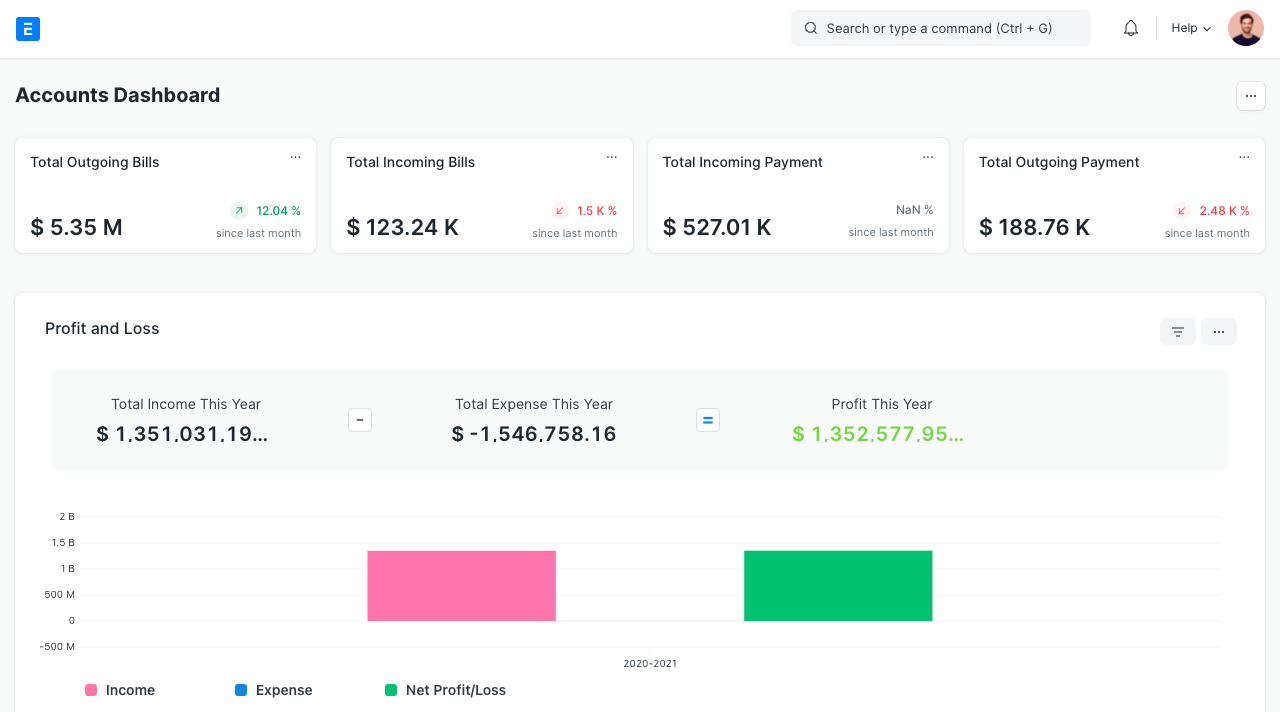
LicenceOpen source, GNU GPL v3
Built onFrappe Framework · Python · JavaScript · MariaDB
DataOne database shared by every module
Runs inA web browser, on desktop or mobile
HostingFrappe Cloud or your own server
Extended byFrappe apps, installed alongside it
One system for the whole business
ERPNext brings accounting, stock, selling, buying, manufacturing, projects and assets into one application. Every module works on the same data, so a sales order, the stock it reserves and the invoice it becomes are records in one system, not copies in several.
It is developed in the open by Frappe Technologies and a wider community, and released under the GNU GPL v3 licence. The software itself is free to use; what a business pays for is hosting, implementation and support.
ERPNext runs on the Frappe Framework, the same open-source framework we use for custom development. That is what makes it practical to extend: new functionality is added as separate apps that sit alongside ERPNext, not as edits to its code.
What ERPNext covers
The modules share one database, so information entered once is available wherever it is needed. We implement the ones your business uses.
Accounting
General ledger, invoices, payments, taxes, bank reconciliation and financial statements.
Selling and buying
Quotations, sales and purchase orders, deliveries, receipts and invoices, with price lists and pricing rules.
Manufacturing
Bills of materials, work orders, job cards, production planning and subcontracting.
HR and payroll
Employees, attendance, leave, salary structures and payroll, with Frappe HR, the separate app used alongside ERPNext.
Projects
Projects, tasks and timesheets, with costs and billing through the same invoices.
Assets
A fixed asset register with depreciation schedules, movements and maintenance.
Quality and support
Quality inspections on goods in and out, and customer issues tracked against service levels.
Implement, customize, build, integrate, automate
If ERPNext already has it, we implement it. If it can be adapted, we customize it. If it doesn’t exist, we build it.
Implementation
We set ERPNext up around your processes: company and accounting structure, masters, roles and permissions, and the steps each team follows. Where data has to come across from your current system, we migrate it.
- Discovery
- Configuration
- Data migration
- Training
Customization
Where the standard forms and documents need to fit your business, we adapt them with custom fields, print formats, validations, workflows and reports, kept in a versioned app.
- Custom fields
- Print formats
- Workflows
- Reports
Custom development
When ERPNext has no place for a process, we build it: new DocTypes, modules and screens in a separate Frappe app, linked to ERPNext’s own records.
- Frappe apps
- DocTypes
- Dashboards
- Custom UI
Integration
We connect ERPNext to the systems it has to work with, through its REST API, webhooks and scheduled jobs, so data isn’t re-typed between them.
- REST API
- Webhooks
- Scheduled sync
Automation
We use ERPNext’s own automation first (workflows, notifications, recurring documents and assignment rules) and add scheduled jobs and server-side rules where those stop.
- Workflows
- Notifications
- Scheduled jobs
Standard ERPNext first. Custom code only where it earns its place.
Every requirement goes through the same three questions, in order.
Is it already in ERPNext?
Then it’s a setting, a master or a role. No code, and nothing extra to maintain.
Does it nearly fit?
Then we customize the forms, documents and workflows around it.
Does it not exist?
Then we build it as a separate Frappe app, never by editing ERPNext’s own code.
Learning ERPNext
For teams who want to understand the system before, during or after an implementation.
Not sure how much of your process ERPNext covers?
Tell us how your business works. We’ll tell you what standard ERPNext already does, what can be customized, and what would need to be built.